

Week of October 27th 2024: Fall Fishing in Low Water
Week of October 27th
The weather continues to be, well, beautiful, but enough is enough! At the risk of repeating myself: we need rain. They will move about and find deep pools and navigate longer, deeper runs. Remember a rule from Tom Rosenbuer in one of his videos: two to four feet of water is ideal for trout. Don’t let refraction fool you - it is worth running a fly through every place that makes you pause, think, and wonder if it can hold fish.
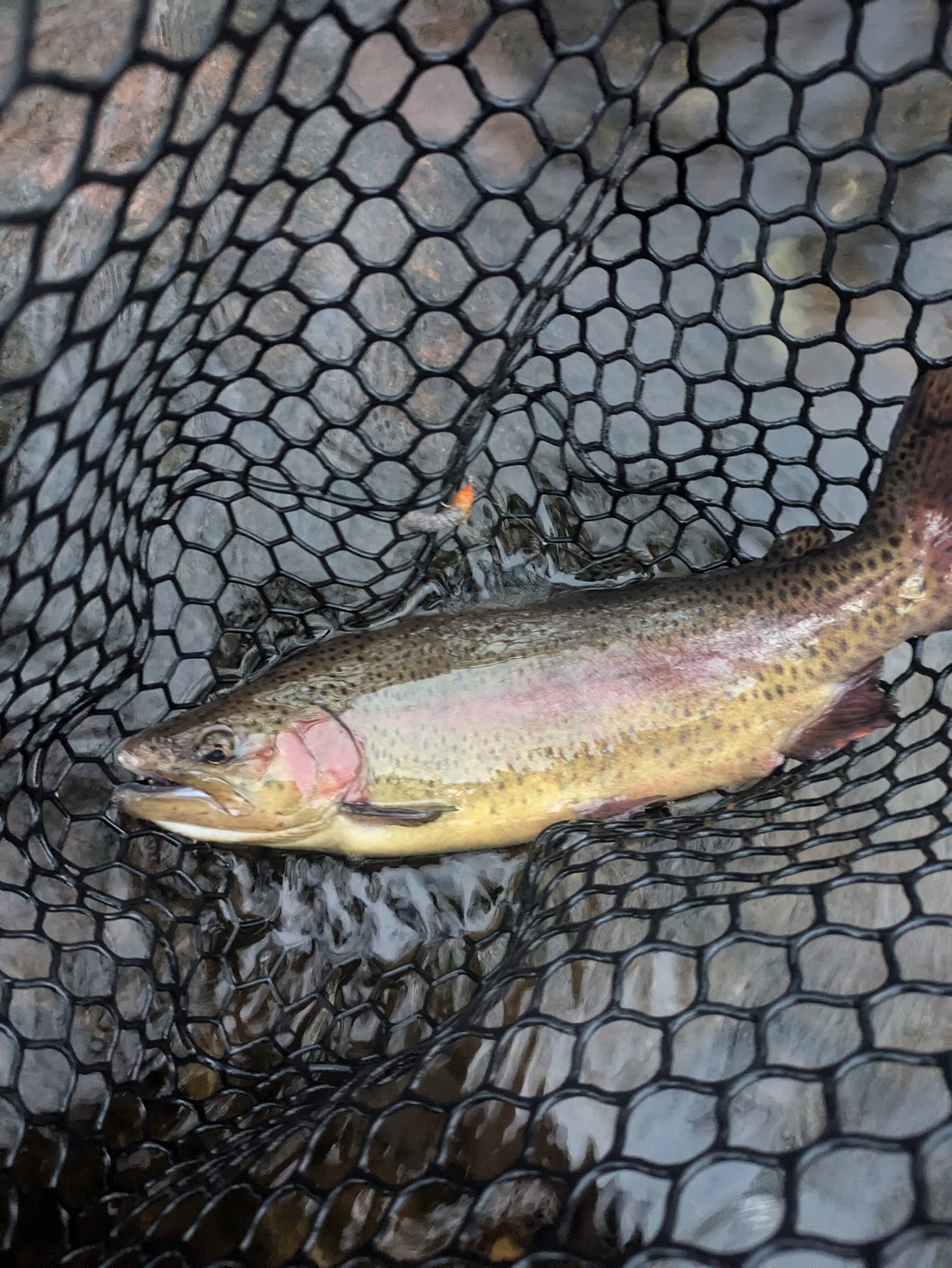
The flies are here, too. Blue Wing Olives, Isonychia and Caddis can still be found. Unfortunately, it takes some time for the trout to learn how to eat out in the wild after being fed in the hatchery, but that also explains a slow day of action after a stocking. It could be a slow week! Some folks are catching and it sounds like most of the takes are subsurface: eggs and small pheasant tail (with some flash) are good choices.
Another obstacle this time of year, high or low water, is wind! Windy days can mess with casting, but the wind can blanket the leaves! The leaves that sunk have not moved much as a result of the low flow and are blanketing the bottom. Be careful wading through these submerged piles. I found I was catching as many leaves from the river bed as I would with a dry snagging leaves on top. With nymphs, a split shot can only make things worse.
To mitigate the situation I use what I call a mopper-dropper (trademark Roy B.). If you can’t guess, it is like the hopper-dropper rigs that are most popular out West. I find a mop fly, with the chenille body, absorbs enough water to sink it, but a strike indicator or river flow keeps it off the bottom and above (most of) the leaves. Behind my mop fly is an egg or small pheasant tail. This rig worked for me early Saturday and Sunday mornings this week - all before 8 am.
I was able to get out a few weekday afternoons immediately after the stocking, but didn’t catch fish. The folks who I did see with fish had spin gear, so us fly flickers may need to wait until the newly arrived trout find out how good organic aquatic insects and eggs taste. Hopefully, there will be enough trout to survive and give us good Winter fishing, too.
We have some exciting new products in the shop - including the New Winston Pure 2. Check out their introductory video. This is a pure dry fly rod - in two to five weights from 6’9’’ to 9’. When you cast this medium action rod, the bend feels even and the recovery is quick. Winston is using a new “NanoParticle” technology. A special attention is given to individual rods Winston makes. Every section is custom built to fit the next section and each section marked with the rod’s unique serial number - hand painted by one woman named Barb, making your Winston a true lifetime rod. Ask to hold the Pure 2 and you’ll be amazed at how light it is. This joins our Winston line-up, including the Air 2 and Boron Super X. More good news - to make room for the Pure 2, our remaining Winston Pures are on sale for 30% off!
Two new items came in from Loon. Their headlamp is here in time for when we set the clocks back. The light is rechargeable and has three brightness options. Further, you may switch from the standard light to a red light which won’t spook fish if you point the light into the water. There is a strobe feature as well, for safety or a dance party after landing a trophy. Music and moves not included. Next is the Ergo Dialed in Bobbin which allows for an adjustable tension on the thread. These are available in black and yellow.
If you have not noticed yet - our new website has launched! Soon, our entire stock of inventory will be available online and you should check out our gallery of customers sharing their success and best hero shots and biographies of guides and staff.
See you out there! Roy B.
Local Hatch Chart (repost from 2020 report)
Morning 9-11 am: Little Dot-winged Sedge Neophylax spp. Tan Elk Hair Caddis #16-18, LaFontaine's Tan Sparkle Pupa #16-18, Hare's Ear Soft Hackle #16-18, Tan Bird's Nest #16-18 October Caddis Pycnopsyche spp. Orange Stimulator #10-12 Trio Tricorythodes Trico #20-24
Midday through Late Afternoon 12 noon - 5pm: Caddis may continue to hatch. see above Blue Wing Olive Baetis levitans, interclaris, quebecensis, vagans. RS2, BWO, Pheasant Tail Nymph #18-20 Don't forget Ants in Cinnamon or Black and Hopper patterns. Dun Midge Paraleptophlebia debilis RS2, Adams #20
Evening 6-8pm: Egg laying caddis and Baetis Spinners