

Week of March 16th 2025: Spring! Time to Close the Rivers!
Week of March 16th
It was my pleasure to speak with the Hacklebarney Trout Unlimited chapter this past week, sharing my limited knowledge and experience with the bugs that consistently and predictably hatch in New Jersey. I was a bit nervous because I knew that many of the people in the audience have vast experience and more expertise than I do. Familiar faces and the overall feeling of angler camaraderie made the presentation fun, for me at least, and the evening in Whippany flew by. I hope people enjoyed it as much as I did. I have more to say on topics that came up if you’re interested in reading my opinion after the brief report.
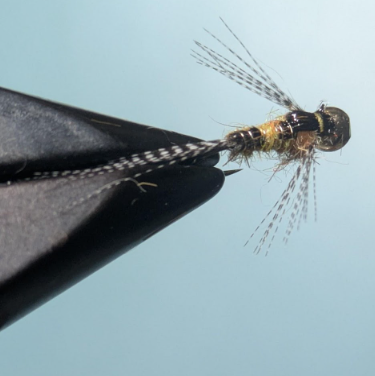
Frenchie and blow torch nymphs produced this week, according to anglers. Euronymphs do well alongside the traditional LBS and baetis nymph patterns. More midges are going to work as water temps increase into the forties, so try different patterns such as Rainbow Warriors or Smoke Jumpers.
Next time you are in the shop, check out our new patterns added to the locally tied lineup at South Branch from Jeffery Deshefy. Jeff’s Mercury Midges and Black Beauty are two good offerings to increasingly active fish. Midday is best, but keep in mind how low the rivers are on sunny days and choose a careful approach as shallow water makes trout more wary. We need rain in a really bad way.
The rivers close for In Season Stocking from Monday, March 17th to April 5th. Check special regulations for the Trout Conservation Areas as these remain open to catch and release fishing.
Morning 9-11am: we see some midge and BWO activity. I still find a small streamer can find fish when the nymph and midge rigs don’t.
Midday through Late Afternoon 12 noon - 3:30pm: Early Black Stonefly: John Collins’ LBS; Jeff’s Copper zebra #22 or Black Copper John #16 Early Iron Blue Quill Baetis tricaudatus RS2, Adams, Pheasant Tail Nymph #16-18 Quill Gordon Epeorus pluralis Hare's Ear nymph #12-14, Quill Gordon Dry #12-14
Mayfly hatches are reliable and knowing the order of appearance of the bugs when they hatch may help in choosing patterns to fish during these precious months of dry fly activity.
Some questions I fielded last Thursday night from the members challenged what-I-think-I-know. Specifically, which do I think is more important – size and color or profile? A classic and well debated question, to which I replied, “size and color,”and here’s why: the profile is very similar in the species as far as order and family are concerned. We have clingers, crawlers, swimmers, and burrowers.
Cahills and March Browns are clingers, for example, while an ISO is a swimmer. The last, burrowers, like a Hexegenia (thanks Jim L!), are rarely seen by trout in the nymphal stage, so I am not sure of many nymphs tied to mimic a subterranean bug. The other three have variation - the clingers are more hydrodynamic and have a flat head, while crawlers stay out of the main force of the current underneath rocks and such. Swimmers, well, swim. The way an abdomen is tied can be skinny, with a biot or quill, or fat by using dubbing and such. Do the dubbed bodies replicate the clingers and the quill abdomen patterns mimic the crawler and swimmers? Even so, all these nymphs exist in the food chain simultaneously. Some nymphs take two years to grow and no nymphs go from egg to adult in a matter of days.
Therefore, in my estimation, the size and color is effective to match the genus of the insect that is particularly active and ready to hatch, because the profile is not as varied as the size and color of the nymph in the state of metamorphosis. Is one “better?” More “effective” is probably the right terminology. How does one test flies among so many variables, weather, water (temp, cfs, clarity, etc.)?
I’d rather have four hare’s ear nymphs in four different colors and sizes to play around with. Otherwise, why not make four 3-D printed replications of actual insects to see which looks most exactly like the mayfly I think is most prolific in the water in May?
The other idea that threw me for a loop was about the exactitude of Catskill flies, versus my willingness to let flies I fish in New Jersey to have less-than-prefect specifications, like really long tails or hackles, which many of mine do. Keep in mind, I'm not a commercial or professional tyer. I had to pause because I really do revere the standards and, when tying for a Catskill trip, adhere to the recipe as closely as I can - measuring tails and hackles against the shank or with a gauge. I love the way these look and their efficacy has been proven with time. Are they the only flies that work? A few tyers from the region offer flies with longer hackles that catch, too. The question may be, do we want to be Rembrandt or Monet?
I guess the point I am making is that mayflies, even the naturals, are not uniform and exact replicas of one another - they are not thousands of twins. I can tell my friend’s Golden Retriever from the others in the dog park; sometimes it is the variant that gets the look for standing out.
See you out there, Roy B.